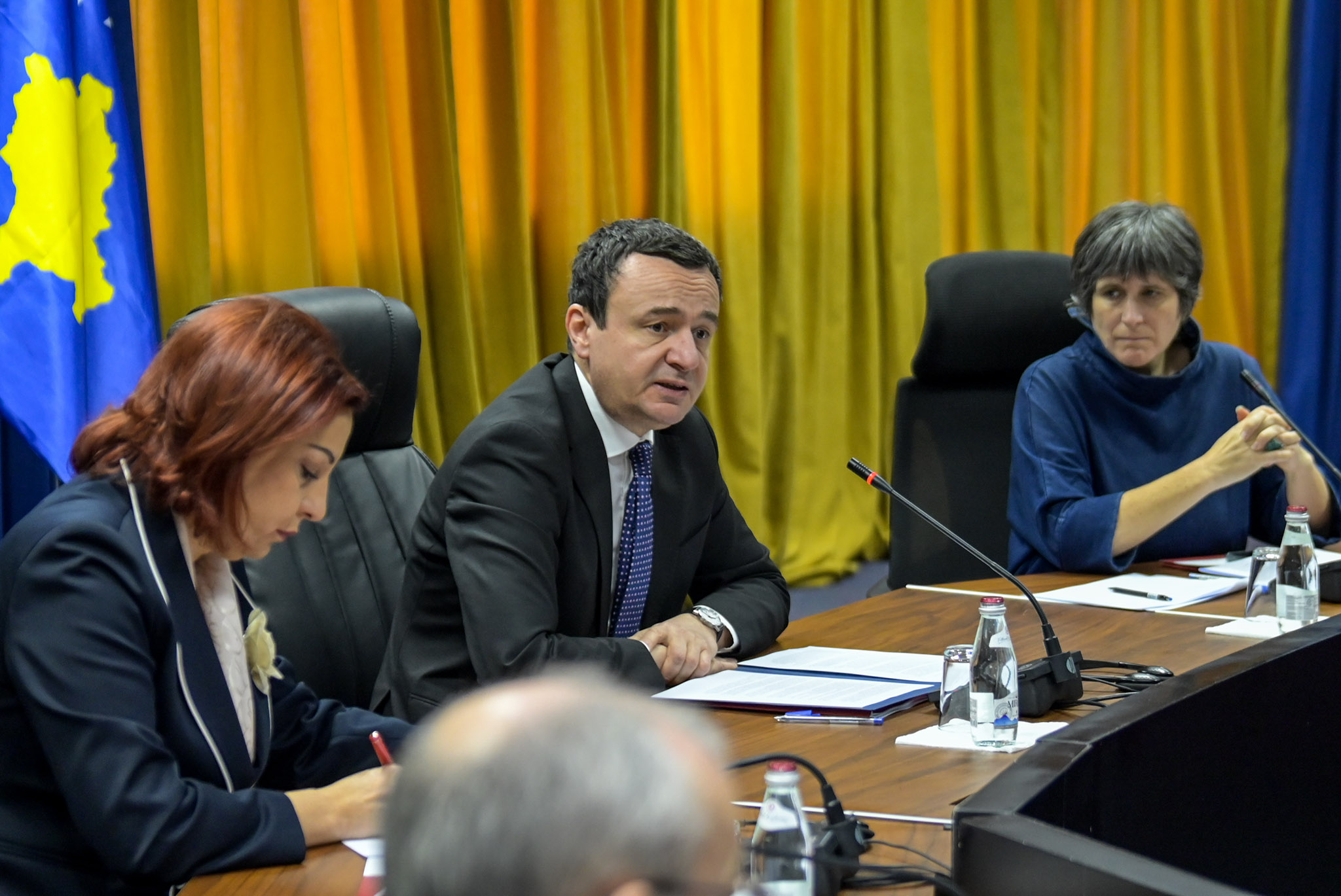
Kryeministri i Republikës së Kosovës, Albin Kurti, mori pjesë në konferencën e donatorëve për sigurimin e strehimit të qëndrueshëm të 60 familjeve të komunitetit rom, ashkali dhe egjiptian të kthyera në Kosovë. Kjo ngjarje u organizua në ndërtesën e Qeverisë.
Në fjalën e tij, kryeministri Kurti theksoi mirënjohjen që sot kemi një mënyrë për të siguruar një zgjidhje afatgjatë për 60 familje që të flenë të qetë dhe të ngrohtë, duke ndjerë se janë në shtëpi.
“Strehimi për familjet më të cenueshme të Kosovës është prioritet i qeverisë sonë. Këtë vit kemi ndarë fonde për mbi 380 familje nga komunitetet jo-shumicë, për të përfituar nga përmirësimi i banesave”, shtoi kryeministri Kurti.
Suksesi i këtij angazhimi, vjen si rrjedhojë e punës nga ana e qeverisë, veçanërisht përmes Ministrisë për Komunitete dhe Kthim e Ministrisë së Administrimit të Pushtetit Lokal, komunat por edhe falë bashkëpunimit të ngushtë e të vazhdueshëm me partnerët tanë ndërkombëtarë.
“Në vizitat e mia në këto projekte ndërtimi dhe takimet e mia me familjet që përfitojnë, kam parë sesi investimi ndikon jo vetëm në gjendjen e tyre materiale, por edhe ndjenjën e shpresës, përkatësisë dhe aftësinë e tyre për të kontribuar në komunitetin dhe vendin e tyre. Jam i bindur për fuqinë transformuese të asaj që ne mund të bëjmë së bashku për 60 familjet që kërkojmë të mbështesim sot”, tha kryeministri Kurti.
Ai theksoi se sot do të shohim dhe planet se si këto familje mund të strehohen siç duhet, me akses në shërbime, në arsim dhe në tregun e punës, si dhe të diskutojmë kostot e sigurimit të këtyre kushteve për këto familje.
Kryeministri Kurti në fund tha se nga 2.5 milionë euro të nevojshme, qeveria jonë do të bëjë një zotim financiar dhe do të dëgjojmë nga ministri Rashiq për mbështetjen që ministria e tij do të ofrojë në veçanti dhe ju jam jashtëzakonisht mirënjohës juve, partnerëve tanë. Me praninë tuaj sot këtu, ju keni treguar gatishmërinë tuaj për të qenë pjesë e zgjidhjes, së bashku me ne, thuhjet në komunikatën për media e ZKM-së.
Many thanks for coming together today to help find a joint solution for sixty of Kosova’s most vulnerable families.
It was last year that I saw a picture of one of these families on social media. They had returned to Kosova but were without housing. Instead, they created a makeshift tent on agricultural land. Adults and children were trying – against the odds – to find a way to live with dignity. I offer many thanks to the civil society activists who drew attention to this case. And I’m glad that after I shared the desperate needs of this family with my advisor, she immediately visited the family to understand more about their case, as well as the short-term and long-term help that was needed.
The family had already benefited from the standard six-month package of support offered by the Ministry of Communities and Returns. But they had been unable to find a sustainable housing solution when that support ran out. After my advisor’s initial visit, she returned with representatives from the Ministry for Communities and Returns, who were able to find additional temporary support for the family. Together, they also collected data on others who had returned to Kosova with the family I’d seen in that Facebook picture. The aim was to understand the complex situation in which all these families were struggling to secure shelter for themselves and a sustainable home back in Kosova.
Sometimes a situation can be both very complicated and very simple. The facts of how this group of families had fallen into their desperate situation involved responsibilities at the international, national and local levels. It also involved a network of agencies called on to help through different mechanisms. These mechanisms are not simple to navigate or coordinate. But the situation can also be reduced to one very simple fact – that here, in our country, there were children and parents who were spending their nights sleeping in a field.
I am deeply grateful for the humanity of the agencies who worked to change that simple fact, even while we all liaised to address the more complicated issues to ensure a sustainable solution. I am deeply grateful that those children and their parents quickly obtained shelter so they were no longer sleeping in a tent, and that today we have a way to secure a long-term solution for 60 families to sleep safe and warm, feeling that they are at home.
Housing for Kosova’s most vulnerable families is a priority of our government. This year we have allocated funding for over 380 families from non-majority communities to benefit from improved housing. This includes families who have received building materials from the Ministry of Communities and Returns, as well as funding for new homes from this Ministry.
Families from non-majority communities have also received funding from the Ministry for Local Government Administration, for the renovation or building of homes. On my visits to these building projects and my meetings with the families who are benefiting, I have seen how the investment impacts not only their material situation, but their sense of hope, their feeling of belonging, and their ability to contribute to their community and country.
So I am convinced of the transformational power of what we can do together for the 60 families we are looking to support today. And I have seen how collaboration is necessary to achieve these positive changes for such families. Many people helped us to get to this point — the point where we are now able to offer a sustainable solution for Roma, Ashkali and Egyptian families returned from North Macedonia and Montenegro. In particular, we have benefited not only from the work of the Ministry for Communities and Returns, but also from the engagement of municipalities who have shown leadership at local level and given their commitment to finding a sustainable solution for these families in need.
We have benefited from the engagement of UN agencies both through work in the field and financial support. We have had offers to help from the EU Office in Kosova. We have benefited from the personal commitment of Ambassador Nicholas Abbott and his team at the British Embassy who have, through UNDP, funded the Danish Refugee Council to undertake a detailed survey of the needs of these returnees.
I hope today’s conference will show that we can achieve so much when these stakeholders, and others, all come together. In this room, I believe we have all that is needed to ensure housing not only for the single family I was first alerted to, but every one of the families from the Roma, Ashkali and Egyptian communities that have returned to Kosova from North Macedonia and from Montenegro.
These families have waited far too long. They have been caught between the complicated facts relating to their return and the simple fact of not having a roof over their heads. We will see today the plans for how they can be properly housed, with access to services, to education and to labour market. And we will discuss the costs of providing this dignity to these families.
Of the 2.5 million euros needed, our government will make a financial commitment, and we will hear from Minister Rasic about the support his ministry will offer in particular and I am enormously grateful to you, our partners. By your presence here today, you have shown your willingness to be part of the solution, together with us.
It’s a cold day today — weather wise — a day that makes us feel grateful for having a home and a shelter. I hope that, by the end of our conference, we will be able to ensure that all the families we are gathered to support will have a place to be safe and warm, and a base to rebuild their lives in Kosova with dignity — just like the rest of us, just as they deserve.